
US ARC River Falls Mss Y-13.F.1.1
·
undated
Part of Ezekiel Lutheran Church. Records, 1890-1997.
9204 results with digital objects
Show results with digital objects
US ARC River Falls SC 52
·
collection
·
1963
A history written by Kenneth White, River Falls, Wisconsin, attorney and founding member of the local National Guard unit; submitted as source material for a class at Wisconsin State University at River Falls taught by Professor John Lankford, 1963.
US ARC River Falls SC 379
·
collection
·
1940
Brief unpublished history, written about 1940 by Mrs. Selma Reinkey, of a Methodist Church establishied in Elmwood, Wisconsin in 1867. Included is biographical information about each minister who served the congregation, with details on the local church circuits they travelled.

US ARC PH 2013.001.129
·
item
Part of Photographic postcard collection
Photo postcard with image of an historical marker about the St. Croix River and Lake St. Croix, perched above the St. Croix River near Hudson, Wisconsin.

UWRF Series 76-20.E.5.2/4
·
folder
·
1994-1996
Part of Physical Education Department subject files, 1913-1996.
US ARC River Falls SC 123
·
collection
·
1963
History of the Afton Township area of Washington County, Minnesota, written for the Valley Creek Women's Club by Grant, with information on pioneer life there and on the Bolles family.
UWRF UWRF 240-24.F.4
·
n.d.
Part of College of Arts and Sciences Dean Administrative Subject Files
description of program
item
·
1963-2015
Part of Quarter Abroad / Semester Abroad: Europe
UWRF Series 233-24.D.3.3
·
1974
Part of West Central Wisconsin Consortium Records, 1973-2001.
US ARC River Falls Mss DT-15.D.1.3
·
1921-1981
Part of American Association of University Women, River Falls Branch, Wisconsin, records, 1935-2014.
Subjects included: River Falls branch and Wisconsin Division
US ARC River Falls Mss DT-15.D.1.8
·
1961-1993
Part of American Association of University Women, River Falls Branch, Wisconsin, records, 1935-2014.
Subjects included: River Falls Branch, Wisconsin Division
1969
Part of Greek Life records, 1951-2011.
UWRF Series 233-24.D.3.3
·
1979-1997
Part of West Central Wisconsin Consortium Records, 1973-2001.
UWRF Series 1-1987-16.D.4.9
·
1982-1983
Part of UWRF Administrative subject and correspondence files, 1896-ongoing.
UWRF Series 216-24.F.3.5
·
1983-2009.
Part of Academic Program Review Records, 1962-2009
US ARC River Falls Mss ER-15.F.4.1
·
undated
Part of Aid Society Norden, Hudson, Wisconsin, Records, 1912-1993.
UWRF Series 130-21.D.5.2
·
1974-1975
Part of William Munns, Dean of Students Subject Files, 1967-1990.
US ARC River Falls Mss AZ-14.D.4.2
·
1910
Part of Baker Land and Title Company, St. Croix Falls, Wisconsin records, 1879-1958.
UWRF Series 187-23.C.2.1
·
1995
Part of Multicultural Services Office - Department Records, 1971-2006.
1945 - 1997
Part of UWRF Subject Files, 1874-Present
handout, information sheet, correspondence,
UWRF Series 233-24.D.3.3
·
1991
Part of West Central Wisconsin Consortium Records, 1973-2001.
1969-07-10
Part of University of Wisconsin-River Falls Oral History Project interviews, 1969-circa 1996.
An interesting, well put together interview with Colonel Walter J. Hoar who actively participated in World War I as a stretcher-bearer and worked in the states with the Army Corp of Engineers. Colonel Hoar has also written a book about the early lumber industry in Wisconsin.
folder
·
1999-2010
Part of Photography Services - Digital Photographs, 1999-2011
folder
·
1999-2010
Part of Photography Services - Digital Photographs, 1999-2011
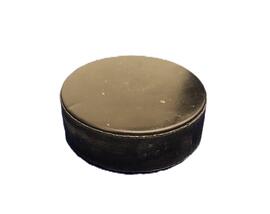
item
Part of Centennial Committee Records, 1970-1975
In 1975, Head Coach Don Joseph led the men’s hockey team to the National Association of Intercollegiate Athletics Championship game in Superior, Wisconsin. While the team did not win, they held a record of 13 wins and 14 losses, with a total of 27 goals for the season. A hockey puck was added to the time capsule with the season’s scores, likely in honor of their participation in the Championship.
UWRF Series 140-22.F.2.5
·
1976-1986.
Part of Sports Information Office - Subject Files, 1920-1989.
UWRF Series 140-22.F.2.5
·
1981-1983.
Part of Sports Information Office - Subject Files, 1920-1989.
UWRF Series 140-22.F.2.6
·
1983-2010.
Part of Sports Information Office - Subject Files, 1920-1989.
UWRF Series 201-23.E.1.31
Part of Athletics Programs, 1940's-Present
UWRF Series 201-23.E.2.23
Part of Athletics Programs, 1940's-Present
UWRF Series 201-23.E.2.24
Part of Athletics Programs, 1940's-Present
UWRF Series 201-23.E.2.25
Part of Athletics Programs, 1940's-Present
UWRF Series 201-23.E.2.26
Part of Athletics Programs, 1940's-Present
UWRF Series 201-23.E.2.27
Part of Athletics Programs, 1940's-Present
UWRF Series 201-23.E.2.28
Part of Athletics Programs, 1940's-Present
UWRF Series 201-23.E.2.29
Part of Athletics Programs, 1940's-Present
UWRF Series 201-23.E.2.30
Part of Athletics Programs, 1940's-Present
UWRF Series 201-23.E.1.31
Part of Athletics Programs, 1940's-Present
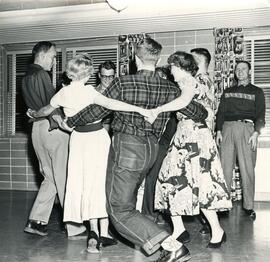
UWRF Series 26-UWRF26_214-4
·
item
·
1952
Part of University Photograph collection, 1875-
Meletean
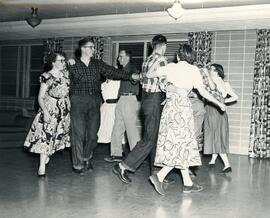
UWRF Series 26-UWRF26_214-2
·
item
·
1952
Part of University Photograph collection, 1875-
Meletean
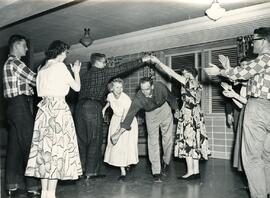
UWRF Series 26-UWRF26_214-3
·
item
·
1952
Part of University Photograph collection, 1875-
Meletean

UWRF Series 26-UWRF26_214-7
·
item
·
1955
Part of University Photograph collection, 1875-
Meletean
1973-03-02
Part of University of Wisconsin-River Falls Oral History Project interviews, 1969-circa 1996.
Joe Hoekstra was born in Giten, Holland, in 1915. He moved to the U.S. in 1951. His earliest recollections include the Spanish influenza epidemic which swept through Europe after WWI, the European depression of the 1920's, the rise of Hitler's Brown Shirts, and the Nazi party of Germany. As a youth, he witnessed the demonstrations between the Brown Shirts and other political parties. During 1938 he was able to travel through much of Western Europe and this was when he saw the Siegfried Line being built.
A reservationsit in the Dutch Army, Mr. Hoekstra was called up on August 29, 1939. When the German Army invaded Holland on May 10, 1949, he fought with his unit until the organized miliraty resistene faded. He then went to work with the Dutch Underground. In May of 1941 he was captured by the Gestapo and was brought to The Hague for questioning, but he managed to escape after being held for only two hours. He spent the rest of the war in various disguises and moved from one place to another.
Mr. Hoekstra also discusses the extermination of the Dutch Jews and how the Jewish leaders had to cooperate with the Nazis and furnish them with lists which contained the names of Jews. These lists were used to fill the concentration camps.
The general deprivation of wartime Holland is also detailed. Mr. Hoekstra recalled how he once had to walk 80 kilometers to get a cartload of potatoes.
He also offers his opinion on the V-1 and V-2 missiles and tells an amusing anecdote of watching a V-1 explode with a "pfft."
1972-07-07
Part of University of Wisconsin-River Falls Oral History Project interviews, 1969-circa 1996.
Mr. Hoekstra was a member of the United States Army from 1965-1968. He discusses his army experiences in Korea and Vietnam and some length, including fire-fights, camp life, and patrols. He also talks about his life in the army after he returned to the United States from overseas, including riot duty in Chicago following the April 4, 1968 assassination of Martin Luther King, Jr. He gives a very personal view of his army experiences, describing people he knew, and miltary situations in which he was involved. He also gives his views on American involvement in Korea and VIetnam, and further adresses his feelings of returning to the States.
UWRF Series 1-1987-16.C.4.14
·
1978-1979
Part of UWRF Administrative subject and correspondence files, 1896-ongoing.
Letters with legislative representatives, working group report dealing with student tuition and fees.
UWRF Series 1--17.C.2.4
·
1931-1945.
Part of UWRF Administrative subject and correspondence files, 1896-ongoing.

UWRF Series 26-UWRF26_219-3
·
item
·
1991
Part of University Photograph collection, 1875-
photo by Patt Ligman and Pieter Froehlich